Best essay writing service that delivers quality help and secure experience to customers worldwide. The company has employed a team of professional researches and writers to ensure every order made by our clients is timely delivered. Custom writing services, essay writers

Business Case for a New Economic Opportunity

Business Case for a New Economic Opportunity

Business Case for a New Economic Opportunity

OVERVIEW

Report on risk and mitigation and the costs and benefits of a proposed initiative.

As a master’s-level health care practitioner, you are expected to consider a number of factors when analyzing the feasibility of a new initiative. For example, you need to keep in mind the various types of risk (such as patient safety, physical plant, financial, or reputation), as well as the present and future value of the service line or economic opportunity into which you are investing resources. You also must balance the competing considerations of your ethical and moral responsibility to provide quality care to patients and populations, while also protecting your care setting’s assets and economic viability in the near and long terms.

Note: Complete the assessments in this course in the order in which they are presented.

By successfully completing this assessment, you will demonstrate your proficiency in the following course competencies and assessment criteria:

  • Competency 1: Analyze the effects of financial and economic factors (such as cost-benefit, supply and demand, return on investment, and risks) in a health care system on patient care, services offered, and organizational structures and operation.
    • Analyze the opportunities and risks relevant to a proposed economic initiative.
    • Analyze the costs and benefits of a proposed economic initiative over a five-year time horizon.
  • Competency 2: Develop ethical and culturally equitable solutions to economic problems within a health care organization in an effort to improve the quality of care and services offered.
    • Propose potential ways to keep costs under control while maximizing the benefits of an economic initiative and ensuring that it remains ethical and culturally equitable.
  • Competency 3: Justify the qualitative and quantitative information used to guide economic decision making to stakeholders and colleagues.
    • Justify the relevance and value of the quantitative and qualitative economic, financial, and scholarly evidence used to support recommendations throughout a report.
  • Competency 4: Develop ethical and culturally equitable economic strategies to address dynamic environmental forces and ensure the future security of an organization’s resources and its ability to provide quality care.
    • Propose ethical and culturally sensitive solutions to address the risks associated with an economic initiative to ensure the future security of a care setting.
  • Competency 5: Apply various communication methods in order to clearly, effectively, and efficiently relate information to stakeholders and colleagues related to economic data, findings, and strategies.
    • Communicate a business case in a logically structured and concise manner, writing content clearly with correct use of grammar, punctuation, and spelling.
    • Effectively support a report with relevant economic data and scholarly sources, correctly formatting citations and references using current APA style.

Assessment Instructions:

In this assessment, you will conduct a risk and mitigation analysis and cost-benefit analysis and report on your findings.

Scenario

The senior management of your care setting has reviewed your Executive Brief: Proposal of a New Economic Opportunity and has decided that it has merit. As a result, you have been asked to take a more detailed look at the feasibility and cost-benefit considerations of implementing your proposed economic initiative over the next five years. The senior management is looking for a 3–5-page report that builds a business case for your economic initiative by analyzing ways to mitigate the risks associated with your original proposal and a completed cost-benefit analysis using the Cost-Benefit Analysis Template, linked in the Resources.

Directions

You have been asked to ensure that your report addresses the following. Note: The bullet points below correspond to grading criteria in the scoring guide. Be sure your work is, at minimum, addressing each of the bullets below. You may also want to read the scoring guide and the Guiding Questions: Business Case for a New Economic Opportunity document, linked in the Resources, to better understand the performance levels that relate to each grading criterion:

Part 1: Risk and Mitigation Analysis

Complete the following:

  • Analyze the opportunities and risks relevant to your proposed economic initiative.
  • Propose ethical and culturally sensitive solutions to address the risks associated with your economic initiative to ensure the future security of your care setting.
Part 2: Cost-Benefit Analysis

Complete the following:

  • Analyze the costs and benefits of your proposed economic initiative over a five-year time horizon.
  • Propose potential ways to keep costs under control while maximizing the benefits of your economic initiative and ensuring that it remains ethical and culturally equitable.

Address Generally Throughout Business Case

Complete the following:

  • Justify the relevance and value of the quantitative and qualitative economic, financial, and scholarly evidence you used to support your recommendations throughout your report.
  • Communicate your business case in a logically structured and concise manner, writing content clearly with correct use of grammar, punctuation, and spelling.
  • Effectively support your report with relevant economic data and scholarly sources, correctly formatting citations and references using current APA style.

Example Assessment: You may use the assessment example, linked in the Assessment Example section of the Resources, to give you an idea of what a Proficient or higher rating on the scoring guide would look like.

Additional Requirements

Your assessment should meet the following requirements:

  • Length: 3–5 double-spaced, typed pages. Your paper should be succinct yet substantive.
    • Be sure to include a title page and reference list.
    • Your completed Cost-Benefit Analysis Template should be included as an appendix within your final business case submission.
  • APA format: Resources and citations are formatted according to current APA style.
  • Resources: Cite 4–5 authoritative and scholarly resources. Be sure to include specific economic data and support as part of your cited resources.

Questions to Consider:

As you prepare to complete this assessment, you may want to think about other related issues to deepen your understanding or broaden your viewpoint. You are encouraged to consider the questions below and discuss them with a fellow learner, a work associate, an interested friend, or a member of your professional community. Note that these questions are for your own development and exploration and do not need to be completed or submitted as part of your assessment.

  • What kinds of quantitative data can support proposals for change in a health care setting? What kinds of qualitative data can do so?
  • What are the five different types of comparative economic analysis?
  • What are some realistic and feasible recommended alternatives for health care issues and problems that currently impact your work? What would be the costs of pursuing those alternatives? What would be the benefits?
  • When and how are the following methods for valuation best used?
    • Human capital.
    • Risk preference.
    • Contingent valuation.
    • Cost-benefit ratio.


SAMPLE ANSWER

Business Case for a New Economic Opportunity

Introduction

Mayo Clinic is a healthcare organization in Rochester, Minnesota. The clinic is a multispecialty hospital that integrates research, education and clinical practice. Mayo clinic aims to develop an Express Care Model to provide urgent care to patients. The Express Care Model helps to provide immediate healthcare services to patients in populated regions. The shortage of healthcare practitioners often leads to long queues as the patients wait to be served (Chang, Brundage & Chokshi, 2015). The healthcare institution not only aims to offer routine screening, but also provide treatment for minor injuries, treat illnesses, refer patients and conduct flue tests. Therefore, the business case outlines an economic strategy for five years by evaluating opportunities and risks for the business case and develops ways of reducing the risks associated with the business.

Part 1: Risk and Mitigation Analysis

Opportunities Associated with the Proposed Economic Initiative

To determine the risk and opportunities of the business case, both the microenvironment and microenvironment of the express care model will be examined. There are about 3.8 million people living in Minnesota, and developing an express care strategy can ensure remarkable economic growth for Mayo clinic (US Department of Labor, 2019). Therefore, creating an emergency care facility will help reduce the burden of healthcare provision and overcrowding of patients in ER departments.

Business Case for a New Economic Opportunity

The ER department often cares for about 250 patients every day. There are also patients who leave without being cared for or leave because the bills are too expensive that they cannot afford (American College of Emergency Physicians [ACEP], n.d.). The Express Care would ensure hospital services are affordable particularly for the low- and middle-income individuals. Most patients in the ER department often do require emergency care and sometimes they are forced to leave without being cared for. The Express Care Model can be used to ensure such patients receive attention of healthcare practitioners to ensure that they are treated appropriately.

Revenues from the emergency department will be critical in providing additional revenue for the Mayo clinic. The local ER departments would be able to get more patients requiring emergency treatment because of the referrals that the facility would get. Providing treatment to the locals would also help develop trust between the clinic and the community.

ORDER A PLAGIARISM FREE PAPER HERE

The Mayo Clinic can handle both minor and critical injuries among patients. This means that the clinic can also offer more assistance to patients to guarantee positive outcomes. Such aspects set the hospital apart from other healthcare institution that provides emergency care or similar services to patients (Gurganious & Greenfield, 2015).  Mayo Clinic will ensure that patients are provided with adequate and quality care in all their healthcare needs. Improving patients’ outcomes leads to satisfaction and loyalty, and the patients would revisit the clinic every time they have a healthcare issue and also refer the clinic to other patients.

Risks Associated with the Proposed Economic Initiative

The use of the Express care model has potential risks. There are several urgent care services provided in Minnesota, and other healthcare institutions have also employed the model in their ER departments. According to the American College of Emergency Physicians (2019), about 72% of emergency physicians care for patients that need urgent care, but sometimes there are no equipment that can ensure efficient delivery of health care services. Such issues are critical that could make patients opt for Mayo clinic that will be well equipped with facilities that could help patients to save costs while attending the emergency departments. Lack of enough healthcare facilities forces many hospitals to refer patients to other healthcare institutions increasing the cost of care for the patients as well as compromising their health due to delayed treatment. Mayo clinic needs to source finances with the help of the organization’s leadership and to involve stakeholders before the initiation of the project.  Availability of equipment and facilities at the clinic would be necessary for ensuring the project is successful.

Business Case for a New Economic Opportunity

Chances of misdiagnosis is another risk that the hospital needs to consider. Because of the high number of patients being cared for on the same day, the physicians can experience burnout which would affect their efficiency. This can lead to medical errors that may put patients’ lives at risk. Therefore, the clinic needs to develop critical interventions to reduce the problems of misdiagnosis. Employing more nurses will be valuable in improving nurse-to-patient ratio to the required level. Nurses and physicians should be enough to ensure they have enough time to care for each patient. Specialized training is also critical to ensure nurses do not cause medical errors such as misdiagnosis (Sanborn, 2018). Medical mistakes may lead to critical ethical and legal issues that may put the organization’s reputation at risk. Nurses and physicians need to be advised to take breaks in the cause of treatment, report errors, and work for few hours to ensure instances of misdiagnosis due to burnouts do not occur.

Part 2: Cost-Benefit Analysis

Costs and Benefits of the Proposed Economic Initiative

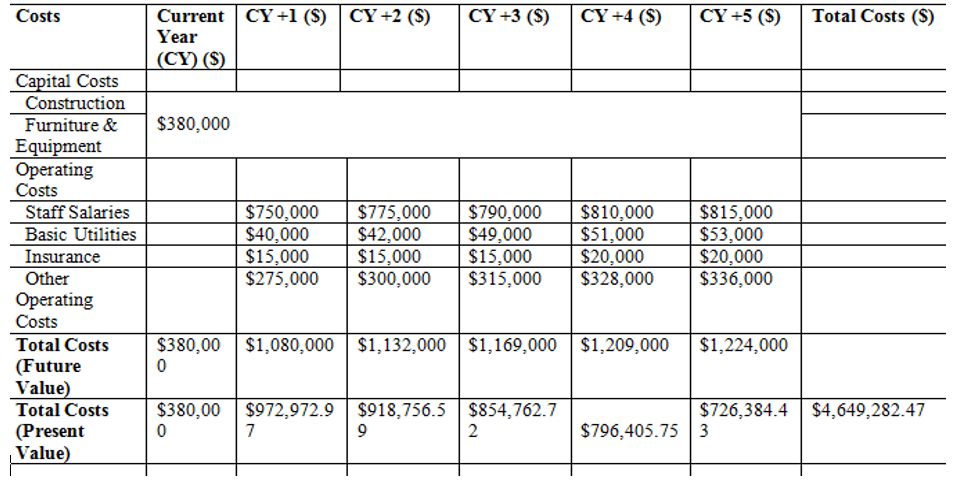
            The express care model has costs and benefits that would be critical to ensure its success. To develop the express care model, the value and advantages of the project have been calculated for the next five years using the 11% discount rate. The discount rate of the present value is determined using the estimated return on that target and the standard capital costs. The capital costs include what will be required to ensure renovation of the care facility as well as the costs for purchasing new equipment and furniture. The cost of operation will consist of employee salaries, insurance, liability, furniture costs, utility costs, and equipment costs. It is projected that the project will cost almost $380,000 and this will also include marketing as well administrative costs.

Business Case for a New Economic Opportunity

According to Gurganious and Greenfield (2015), the care setting dealing with emergency services should have both part-time and full-time physicians and a part-time physician assistant (PA) or nurse practitioner and a medical assistant (MA). Therefore, Mayo clinic will operate every year based on the community needs and upon review on its performance, employees would be added if the revenue and influx of patients increase. Based on the US Department of Labor (2019), the operation costs in the first year will be $30,000 for a medical assistant, $112,000 for a PA or NP, $230,000 for a physician, and $25,000 for a secretary or patient representative. The Economic Policy Institute (2018) considers that the growth of salaries in the healthcare sector is estimated to be about 2%. Mayo clinic will base its employees’ wages by reviewing the estimated amount of salary growth every year. More funds may be needed in the future in case the organization employs more employees to care for the increased influx of patients.

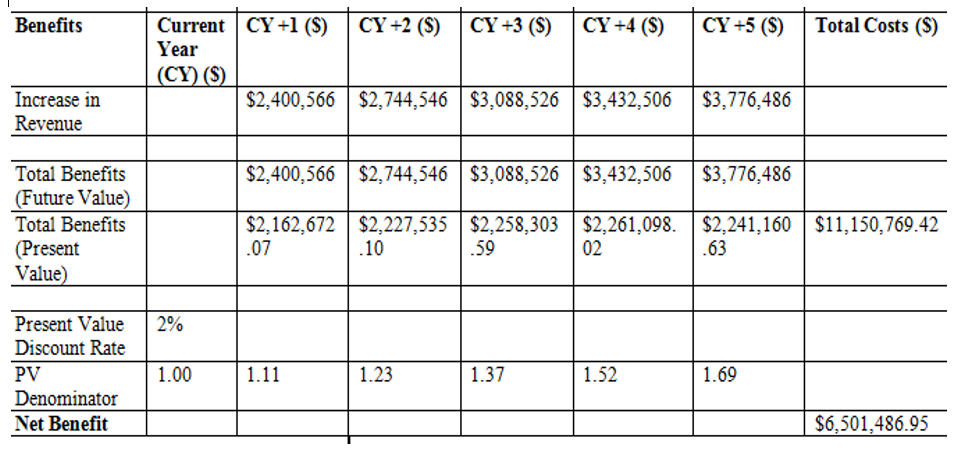
The utility cost is projected to increase every year, mainly due to the increase in patients coming to hospital for services as well as the increased number of physicians and supporting staff. The present value of the hospital for the five years will, therefore, be approximately $4,649,282.47, as observed in Appendix 1. The net revenue is calculated using the charge or bill of each client. According to Qin, Prybutok, Prybutok, and Wang (2015), the average number of patients who visit the hospital for urgent care is about 60 to 80 patients. Mayo clinic estimates a total of 70 patients being served every day resulting in a cost of $135 per visit. The operation cost for the first year will be about $3,439,800 and it is estimated to increase for the next five years at a rate of 5% p.a. The 11% discount rate in the five year time is expected to be $11,150,769.42. Final calculations indicate that the net benefits for Mayo clinic will be about $6,501,486.95 indicating that the project will make an economic sense and increase revenue for the organization.

Business Case for a New Economic Opportunity

Ways to Keep Costs under Control While Maximizing the Benefits

The hospital operations need to be economically viable based on the projected net revenue after five years in order for the project to be successful. Regulatory costs control will be maintained through the managing the number of employee as well as cost of care delivery. Overhead costs that are not directly linked to the delivery of care but affects the total cost of service delivery will also be monitored. Other significant expenses that needs to be monitored include essential utilities, insurance, supplies, equipment replacement and repairs, and building maintenance.

Tracking the maintenance records and logs will allow Mayo clinic to reduce sudden breakdown of equipment. Equipment that need attention should be repaired before they completely breakdown. The utilities will be reviewed by the management team every year to ensure the clinic is running efficiently and excessive spending is control. Besides, managing the insurance, internet and phone costs throughout the five years will be critical. Costs will also reduce through monitoring daily operations regularly. Donated supplies will be accepted and reusing office supplies will be considered.  Thus, the project will ensure the facility has best equipment and facilities, and the environment is conducive for proper delivery of health care.

Business Case for a New Economic Opportunity

Conclusion

In conclusion, the development of an Express Care Model by Mayo Clinic will help the provision of urgent care to patients. The model will be imperative to provide immediate healthcare services to patients in populated regions with few healthcare practitioners. The Mayo Clinic will provide patients with regular screening and treatment to patient who needs emergency care to help reduce the burden of healthcare provision and overcrowding of patients in ER departments. In order to be successful, the model would require careful implementation and monitoring for next five years. The discount rate, capital costs, cost of operation, utility cost, regulatory control costs, overhead costs, would be critical control of excessive spending. The main risk of the project includes lack of healthcare facilities to ensure the provision of quality care. Having enough equipment and facilities to improve patient health would be necessary to ensure the project is successful.


References

American College of Emergency Physicians [ACEP] (n.d.) Urgent Care. Retrieved from http://newsroom.acep.org/2009-01-04-urgent-care-fact-sheet

Chang, J. E., Brundage, S. C., & Chokshi, D. A. (2015). Convenient ambulatory care —

Promise, pitfalls, and policy. The New England Journal of Medicine, 373(4), 382–388. Doi: 10.1056/NEJMhpr1503336

The Economic Policy Institute. (2018). Nominal wage tracker. Retrieved from https://epi.org/nominal-wage-tracker/

Gurganious, V., & Greenfield, D. (2015). Starting an urgent care center five essentials for success. Medical Economics, 92(11), 47–48. Retrieved from https://www.ncbi.nlm.nih.gov/pubmed/26298963

Qin, H., Prybutok, G. L., Prybutok, V. R., & Wang, B. (2015). Quantitative comparisons of urgent care service providers. International Journal of Health Care Quality Assurance, 28(6), 574–594. Doi: 10.1108/IJHCQA-01-2014-0009

Sanborn, B (2018). Urgent care centers grow in number, reach thanks to comprehensive capabilities, convenience, and demand. Business intelligence Journal. Retrieved from https://www.healthcarefinancenews.com/news/urgent-care-centers-grow-number-reach-thanks-comprehensive-capabilities-convenience-millennial

US Department of Labor (2019). Occupational Employment Statistics. Retrieved from https://www.bls.gov/oes/oes_emp.htm


Appendix: Cost–Benefit Analysis over a 5-Year Period
 

Business Case for a New Economic Opportunity

Business Case for a New Economic Opportunity


Needs help with similar assignment?

We are available 24x7 to deliver the best services and assignment ready within 3-4 hours? Order a custom-written, plagiarism-free paper

Get Answer Over WhatsApp Order Paper Now

Executive Brief: Proposal of New Economic Opportunity

Executive Brief: Proposal of New Economic Opportunity

Proposal-Assessment 1 Detailed Instructions are uploaded along with a detailed example and template. PLEASE follow every single detailed instruction and bullet point accordingly and please make sure that you review the scoring guide/competencies prior to returning to me. Also please make sure that ALL editing is thorough! Thank You!


Economic Decision Making in Health Care


Assessment 1

Executive Brief: Proposal of New Economic Opportunity


OVERVIEW

Propose an economic initiative that presents an opportunity for improved care quality.

Master’s-level health care practitioners are charged with the responsibility of constantly scanning the external environment for shifts in supply of and demand for services. Concurrently, leaders must examine strategic fit with their organization’s directional strategy and determine if adjustments need to be made for current service offerings, updates in equipment, changes in staffing models, and a variety of other decisions. Each decision that is proposed must be evaluated in terms of the health care setting as a system, alignment with the mission and strategy, available internal resources, potential contract and payer source implications, and the short- and long-term economic effects at both the micro and macro levels.


Note: Complete the assessments in this course in the order in which they are presented.

By successfully completing this assessment, you will demonstrate your proficiency in the following course competencies and assessment criteria:

  • Competency 1: Analyze the effects of financial and economic factors (such as cost-benefit, supply and demand, return on investment, and risks) in a health care system on patient care, services offered, and organizational structures and operation.
    • Analyze the supply and demand for a proposed economic initiative within contexts relevant to a care setting.
  • Competency 2: Develop ethical and culturally equitable solutions to economic problems within a health care organization in an effort to improve the quality of care and services offered.
    • Propose an economic initiative that presents an opportunity for a care setting at both the micro and macro levels, and that will provide ethical and culturally equitable improvements to the quality of care.
  • Competency 3: Justify the qualitative and quantitative information used to guide economic decision making to stakeholders and colleagues.
    • Explain relevant economic and environmental data that support a proposal and analysis.
  • Competency 5: Apply various communication methods in order to clearly, effectively, and efficiently relate information to stakeholders and colleagues related to economic data, findings, and strategies.
    • Communicate an economic proposal in a logically structured and concise manner, writing content clearly with correct use of grammar, punctuation, and spelling.
    • Effectively support a proposal with relevant economic data and scholarly sources, correctly formatting citations and references using current APA style.


Assessment Instructions:

In this assessment, you will propose an economic initiative that presents an opportunity for improved care quality.

Scenario

As an emerging health care leader, the senior management has requested that you independently research and explore one of the economic opportunities that may be available in your care setting. This may be offering a new service line, working to improve a service line already offered, retiring an outdated or unprofitable service line, or any other economic initiative that you believe will be of benefit to your care setting in the short and long term. One example of this is a recently launched partnership with a local bicycle sharing company. Your care setting partners with them to host healthy community events that offer free screenings for early detection of various health issues. This helps fulfill some of your care setting’s preventive and healthy lifestyle initiatives, while also potentially driving referrals to other services provided by your care setting. You have been asked to submit your proposal in the form of a 2–4-page executive summary that includes your proposed economic initiative, supporting economic data, and an analysis of the proposal’s benefits for your department and for the care setting overall.

Directions

You have been asked to ensure that your report addresses the following. Note: The bullet points below correspond to grading criteria in the scoring guide. Be sure your work is, at minimum, addressing each of the bullets below. You may also want to read the scoring guide and the Guiding Questions: Executive Brief: Proposal of New Economic Opportunity document, linked in the Resources, to better understand the performance levels that relate to each grading criterion:

  • Propose an economic initiative that presents an opportunity for your care setting at both the micro (departmental, neighborhood) and macro (organizational, community) levels that you believe will provide ethical and culturally equitable improvements to the quality of care.
  • Analyze the supply and demand for your proposed economic initiative within contexts relevant to your care setting.
  • Explain relevant economic and environmental data that support your proposal and analysis.
  • Communicate your economic proposal in a logically structured and concise manner, writing content clearly with correct use of grammar, punctuation, and spelling.
  • Effectively support your proposal with relevant economic data and scholarly sources, correctly formatting citations and references using current APA style.

Example Assessment: You may use the assessment example, linked in the Assessment Example section of the Resources, to give you an idea of what a Proficient or higher rating on the scoring guide would look like.

Additional Requirements

Your assessment should meet the following requirements:

  • Length: 2–4 double-spaced, typed pages. Your proposal should be succinct yet substantive.
  • APA format: Resources and citations are formatted according to current APA style.
  • Resources: Cite 3–5 authoritative and scholarly resources. Be sure to include specific economic data and support as part of your cited resources.


Questions to Consider:

As you prepare to complete this assessment, you may want to think about other related issues to deepen your understanding or broaden your viewpoint. You are encouraged to consider the questions below and discuss them with a fellow learner, a work associate, an interested friend, or a member of your professional community. Note that these questions are for your own development and exploration and do not need to be completed or submitted as part of your assessment.

  • What factors determine the price and quantity of health care? What factors determine the demand for health care services?
  • What suggestions do you have for improving the economic situation of your current health care setting? How might strategies or priorities need to shift to keep up with the changing health care economic environment?
  • How do the Centers for Medicare & Medicaid Services (CMS) regulations impact documentation, billing, and reimbursement?


SAMPLE ANSWER

Executive Brief: Proposal of New Economic Opportunity

The reduced concerns about sterilization and disinfection processes in healthcare setting has led to increased nosocomial infections. Usually, the contagions occur after a victim has been admitted to hospital or a few hours after discharge, and about a month in case of an operation.  The increased reported cases of nosocomial infections ascertain the high cases of morbidity and mortality as well as financial strain on both patients and hospitals (Revelas, 2012). Thus, there is an urgent need for system change that will ensure that safety of patients in regards to the expected outcomes while under care of medical practitioners is improved. A regulatory approach to nursing practices within healthcare facilities can help in reducing or eliminating risks that patients are susceptible. Succinctly defined and formulated supervisory measures that can guarantee competent undertakings in intensive and special care units to minimize prevalence of nosocomial diseases (Hartmann, Arefian, Vogel, & Kwetkat, 2009). This article outlines a brief account of supervisory approach as an economic way of system change that can help to improve patient outcome by mitigating the challenges of healthcare-acquired infections.

Executive Brief: Proposal of New Economic Opportunity

The prevalence of nosocomial infections affects one out of ten patients that visit a healthcare facility (Stone, 2011). This signifies a lack of a sustainable culture that guarantees competence and adequate care when handling sensitive aspects such as those touching on life. Nosocomial diseases and infections affect both adults and children. Both genders have an equal chance of being infected.  Pediatric patients are also prone to these infections.  Children are mostly susceptible to bloodstream infections (Reveals, 2012). The reason for vulnerability is that children body system is not highly developed to fight contagions without external boost to immune system. Pneumonia and urinary tract infections are prevalent among adults. Methods and medical procedures used in the treatment of adult urinary complications require special attention and hygiene. Pediatric patients such as infants and youngsters in PICU or NICU are also vulnerable to healthcare-acquired infections. It is estimated that about two million individuals in a year are affected by nosocomial diseases in United States (Scott, 2008). Over 90,000 of those infected ends up dying because of extremity of complications.  The annual increase rate of infection in U.S. is about 33% (Scott, 2008).

ORDER A PLAGIARISM FREE PAPER HERE

The financial implications of diseases on the healthcare sector is worth noting. About $28 billion to $40 billion direct costs are recorded in hospitals every year (Scott, 2008). Most healthcare facilities are affected by nosocomial hospital infections that lower quality of patient outcomes as well as compromising the patient’s safety.  Treatment burdens associated with these diseases are costly. Therefore, there is need for an urgent change that will ensure that shortcomings are mitigated through nursing supervision mechanisms. It is estimated that 70% of bacteria that cause infections have mutated to resistant levels (Hartmann et al., 2009).  The increased expense for managing medical facilities and the high cost of healthcare services require a systematic change that is economical but also effective.

It is essential to note that healthcare-acquired infections emanate from lack or inadequate supportive culture within a hospital setup that is also encouraged by some other factors.  Diseases affect the nature of patients’ outcomes by affecting their quality of care while under medication.  Hospitals usually house many patients whose conditions are already stale (Nursing Times, 2010).  The numbers of patients who occasionally visit health centers seek medical attention because of their diverse ailments.  High number of patients leads to congestion in hospitals that leads to straining the available resources. Each sick person requires individual focus, and there exist chances of negligence from health practitioners because of mounting pressure due to high number of patients.  The nurse to patient ration is a critical problem in healthcare institutions. Currently, the U.S. is facing nurse shortage and the problem seems to be increasing. Burnout experiences among healthcare professionals can hinder their competence and lead to medical errors (Nursing Times, 2010).  Many procedures can be undertaken when conducting diagnosis and treatment tasks. Some processes are beyond standard body protection mechanisms (Schumacher et al., 2013). When doctors move from one individual to another, chances of pathogenic transmission are high if inadequate sterilization and disinfection methods are used during the treatment process. One can argue that nursing specialization could assist in reducing patient to patient transmission. However, it is worth noting that nurses are bound to esteem life and their actions are derived from the need to save as many lives as possible with their acquired skills and competence.

Executive Brief: Proposal of New Economic Opportunity

The prevalence of risky conditions that can lead to infections in hospitals can be controlled by setting up supervisory standards and quality measures that will encourage patients’ safety. Setting up strategies that will ensure that medical processes are supervised will guarantee safety if amalgamated with adequate facilities such as modern equipment and adequate human resources (Schumacher, Allignol, Beyersmann, Binder, & Wolkewitz, 2013).  The notion of supervision has not been fully incorporated into medical practice owing to costs and complexity of the processes. However, the involvement of health administrators and managers in nursing activities processes is associated with improved patient safety. Worth noting is that sectors of economy such as corporate industry have realized how supervision is attached to potential of profit margin increase. In nursing, there are no precise mechanisms for engagement and sharing of challenges practitioners face in working environment. Therefore, high chances of cumulative burnouts and incompetence that could compromise in-hospital quality of patient outcomes and safety exist (Nursing Times, 2010). Such forums can assist in providing space and time to consider avenues for improving quality of service and safety while taking care of patients to reduce rates of nosocomial infections. Supervisory processes meant to eradicate hospital-acquired diseases require a procedural process. Appropriate supervisory system change is, therefore, essential to assist in reducing the risk that patients are exposed to from nursing activities and lower levels of nurse-sensitive consequences among the patients (Stone, 2011).  The quality of healthcare provided in hospitals an important issue not only to the patients but also to the health physicians as demonstrated in their oath of service to protect life. Supplementary strategies stemming from external environment can improve commitment and competence of nurses and eliminate nosocomial contagions.

In summary, it is indispensable to recognize how healthcare-acquired infections originate from ordinary culture within a healthcare facility setup that is fortified by many factors.  Infections affect nature of patients’ outcomes by distressing eminence of care they are permitted to receive within the hospital premises. The method is a necessary progressive tool that is engrossed on conveyance of quality nursing care to alleviate pervasiveness of nosocomial contagions. For hospital management to control effects originating from homeopathic activities carried out by nurses and clinicians, it is essential for administrators to deliberate on supervision models that will assist in mitigating any shortcoming. Thus, there is an urgent need for system change that will ensure that safety of patients with regards to the expected outcomes while under care of medical practitioners is improved.


References

Hartmann, M., Arefian, H., Vogel, M., & Kwetkat, A. (2009). An economic evaluation of

interventions for the prevention of hospital-acquired infections: A systematic review. PLoS One, 11(1): e0146381. doi: 10.1371/journal.pone.0146381.

Nursing Times. (2009). An integrated approach to introducing and maintaining supervision:

4S model. Retrieved from http://www.nusringtimes.net/nursing-practice-clinical-research/acute-care/an-integrated-approach-to-introducing-and-maintaning-supervision–4s-model/5000899.article

Nursing Times. (2010). Clinical supervision using 4S model 1: Considering the structure and

setting it up. Retrieved from http://www.nusingtimes,net/clinical-supervision-using–4s-model-1-condiering–structure-and-setting-it-up/5013987.fullarticle

Reveals, A. (2012). Healthcare-associated infections: a public health problem. Niger Med J.

53(2):59-64. doi: 10.4103/0300-1652.103543.

Schumacher, M., Allignol, A., Beyersmann, J., Binder, N., &Wolkewitz, M. (2013). Hospital-

acquired infections: Appropriate statistical treatment is urgently needed.  International Journal of Epidemiology, 42(5), 1502 – 1508. doi: 10/1093/ije/dyt111

Scott, R. D. (2008). Direct medical costs of healthcare-associated infections in US hospitals

and the benefits of prevention. CDC. Retrieved from http://www.cdc.gov/ncidod/dhqp/pdf/Scott_CostPaper.pdf

Stone, P. W. (2011). Economic Burden of healthcare-associated infections: An American

Perspective. Expert Rev Pharmacoecon Outcomes Res. 9(5): 417–422.

doi: 10.1586/erp.09.53


.


Needs help with similar assignment?

We are available 24x7 to deliver the best services and assignment ready within 3-4 hours? Order a custom-written, plagiarism-free paper

Get Answer Over WhatsApp Order Paper Now

The Nurse Staffing Standards and Quality Care Act

The Nurse Staffing Standards and Quality Care Act

  • Review the Congress website provided in the Resources and identify one recent (within the past 5 years) proposed health policy.
  • Review the health policy you identified and reflect on the background and development of this health policy.

Post: Please follow This instruction.

  •       This is a discussion
  •       No tittle pages.
  •       No running heads.
  •       This is a Masters level class
  •       APA Format with intext citation

Required to use the reading resources AT LEAST TWO. Outside resources should be peer review Articles.

Tittle: Evidence Base in Design

Short Introduction with purpose statement


Post

ü  Post a description of the health policy you selected and a brief background for the problem or issue being addressed.

ü  Explain whether you believe there is an evidence base to support the proposed policy and explain why.

ü  Be specific and provide examples.

Conclusion/ Summary

Reference list in (APA FORMAT)


SAMPLE ANSWER

The Nurse Staffing Standards for Hospital Patient Safety and Quality Care Act

The Nurse Staffing Standards for Hospital Patient Safety and Quality Act consider that adequate nurse staffing is important in provision of care, preventing adverse events, and improving patient’s outcomes (Congress.Gov, 2019). The bill develops requirements for nurse-to-patient staffing, provides whistleblower protections, and licensed practices for nurses.

The enactment of the bill will ensure healthcare institutions develop and implement staffing requirements that meet the nurse-to-patient staffing plans and ensure patient safety and quality care (Congress.Gov, 2019). Besides, the enactment of the bill will ensure there are enough direct care registered nurses in the operating room, emergency unit, telemetry units, acute care psychiatric care units, postpartum units, well-baby nursery, and during declared emergency (Schakowsky & Brown, 2017).

ORDER A PLAGIARISM FREE PAPER HERE

The policy is evidence based since hospitals will be needed to improve their plans for staffing, and get involved in re-evaluation of staffing plans (Milstead & Short, 2019). According to Kouatly, Nassar, Nizam, and Badr (2018), patients are more likely to survive when the health care institution follows the mandated patient-nurse ratio. This means that the link between patient-nurse ratios is critical in provision of quality and holistic care. Besides, considering patient-nurse ratio reduces burnout among nurses, which ensure the provision of quality care. For example, the operating room cannot exceed one nurse for each patient. In the psychiatric ward, the nurse to patient ration should be about one nurse for every six patients and in the emergency and pediatric units, there should be about one nurse for every four patients (Schakowsky & Brown, 2017).  However, nurses have the ethical and legal obligation to refuse an assignment if it places the patient’s life at risk (Olley, Edwards, Avery, and Cooper, 2019). Thus, increasing above the required minimums would ensure patients’ needs and care is achieved. Organizations that do not comply need to face civil monetary penalties as the best corrective action.


References

Congress.Gov. (2019). H.R.2392 – Nurse Staffing Standards for Hospital Patient Safety and

Quality Care Act of 2017. Congress. https://www.congress.gov/bill/115th-congress/house-bill/2392

Kouatly, I. A., Nassar, N., Nizam, M., & Badr, L. K. (2018). Evidence on Nurse Staffing Ratios

and Patient Outcomes in a Low‐Income Country: Implications for Future Research and Practice. Worldviews on EvidenceBased Nursing15(5), 353-360.   https://doi.org/10.1111/wvn.12316

Milstead, J. A., & Short, N. M. (2019). Health policy and politics: A nurse’s guide (6th ed.).

Burlington, MA: Jones & Bartlett Learning.

Olley, R., Edwards, I., Avery, M., & Cooper, H. (2019). Systematic review of the evidence

related to mandated nurse staffing ratios in acute hospitals. Australian Health Review43(3), 288-293. https://doi.org/10.1071/AH16252

Schakowsky , J., & Brown, S. (May 9, 2017). Schakowsky and Brown reintroduce the Nurse

Staffing Standards for Hospital Patient Safety and Quality Care Act. schakowsky.house. https://schakowsky.house.gov/press-releases/schakowsky-and-brown-reintroduce-the-nurse-staffing-standards-for-hospital-patient-safety-and-quality-care-act/


Needs help with similar assignment?

We are available 24x7 to deliver the best services and assignment ready within 3-4 hours? Order a custom-written, plagiarism-free paper

Get Answer Over WhatsApp Order Paper Now

Chronic and Acute Asthma

Chronic and Acute Asthma

Write a 2- to 3-page paper that addresses the following:


1. Describe the pathophysiological mechanisms of chronic asthma and acute asthma exacerbation. Be sure to explain the changes in the arterial blood gas patterns during an exacerbation.

2. Explain how the factor you selected might impact the pathophysiology of both disorders. Describe how you would diagnose and prescribe treatment for a patient based on the factor you selected.

3. Construct two mind maps—one for chronic asthma and one for acute asthma exacerbation. Include the epidemiology, pathophysiology, and clinical presentation, as well as the diagnosis and treatment you explained in your paper.

Note: The School of Nursing requires that all papers submitted include a title page, introduction, summary, and references.


SAMPLE ANSWER

Asthma

Asthma is referred to as a chronic inflammatory disorder that causes constriction and obstruction of the bronchial mucosal. Asthma attack can also lead to inflammation of the smooth muscles due to the hyper- responsiveness of the airway resistance or narrowed (Wenzel et al. 2016). Both acute and chronic asthma are often similar in their pathophysiology. This paper analyzes the pathophysiological mechanisms of chronic asthma and acute asthma and explains the changes in the arterial blood gas patterns during an exacerbation (Wenzel et al. 2016). The paper also explains how age factor impact the pathophysiology of both disorders.

Chronic Asthma Exacerbation

The pathophysiology of chronic asthma is characterized by bronchoconstriction stimuli and mucus secretion. The bronchoconstriction is caused by peptide neurotransmitters, the bronchial neural function, and induced by smooth muscle contractions (Evans et al. 2012). In the early stages, the toxic neuropeptides, and eosinophils are released leading to the inflammatory response and bronchial hyper-responsiveness (Evans et al. 2012). Oxygenation is also involved in chronic asthma because of the bronchial airway restriction. Hyperventilation often affects the arterial blood gas leading to hypoxemia and respiratory alkalosis in patents.

ORDER A PLAGIARISM FREE PAPER HERE

Acute Asthma Exacerbation

The pathophysiologymechanism of acute asthma results when bronchial airways are affected leading to resistance in the airway.  Many cells often lead to hypersensitivity of the airway in acute Asthma such as basophils, eosinophil, neutrophils, mast cells, B lymphocytes, T helper 2 lymphocytes, and dendritic (Lemanske & Busse, 2010). These cells react differently causing inflammatory that may lead to increase in secretions, edema, and bronchospasm. The arterial blood gas in chronic asthma also results due to short inspirations and long expirations due to lack of oxygenation. Patients often trap air due to short and long inspirations that cause respiratory acidosis due to respiratory disadvantage increase in carbon dioxide and a decrease intidal volume (Lemanske & Busse, 2010).

Impact of Age Factor

Asthma as a chronic pulmonary infection affects both adults and children. However, researchers have shown that it is more affected by children below the age of 17 years old (Hasegawa et al. 2015).  Therefore, asthma affects people of all ages, from infants to older adults.  Although treatment may be challenging due to detailed assessment, the inability to distinguish the signs and symptoms of asthma and manage treatments may occur (Ponikowski et al. 216). When assessing patients with respiratory issues, nurses and physicians must conduct analysis of the vaccination, history and physical records to help understand the patient condition and present re-infection of other diseases.

Asthma may be acute or chronic in both children and adults leading to inflammation and increase level of mucus affecting the flow of air. Exacerbation is caused by inflammation and sensitivity. However, it is sometimes due to asymptotic attacks (Ponikowski et al. 216). During exacerbation, patients may experience the use of accessory muscles, increased heart rate, prolonged expiration, expiratory wheezing, nonproductive cough, dyspnea, inability to breathe, and tightness of the chest (Ponikowski et al. 216). Thus, many factors can lead to exacerbation, in all ages including not get enough inhalers, not using medication properly, second-hand smoking in children, allergy season, and flowering season.


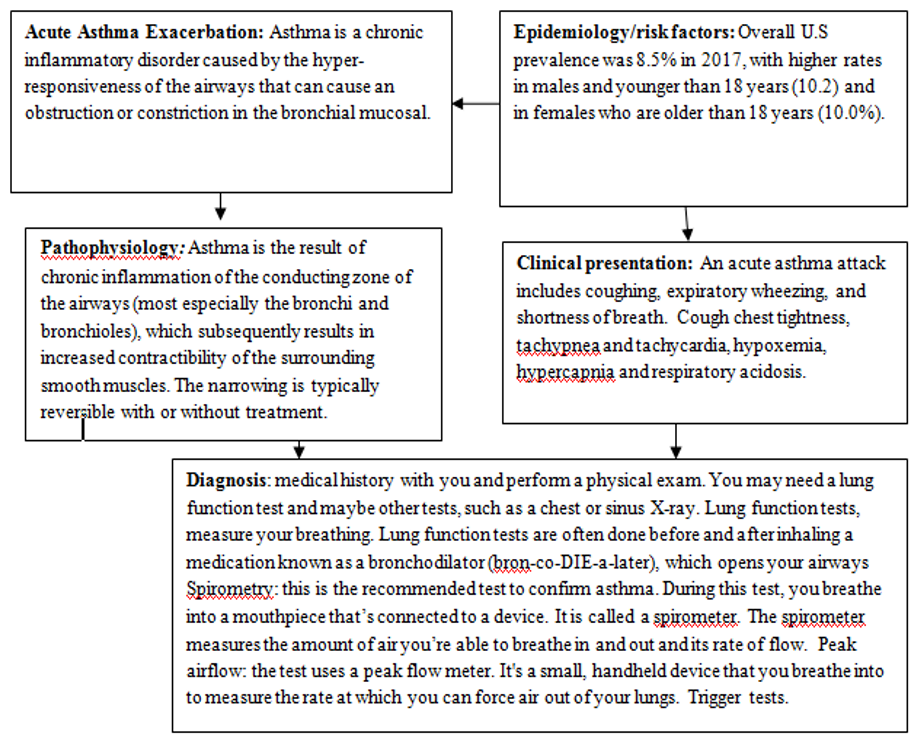
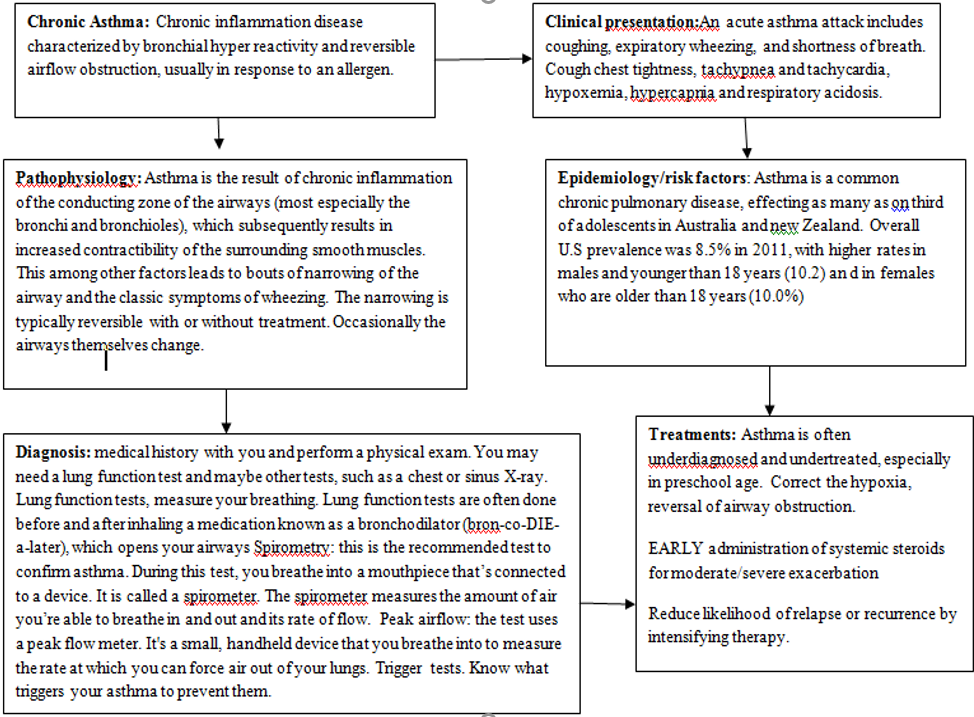
Mind Maps

Acute Asthma

Chronic Asthma and Acute Asthma


Chronic Asthma

Acute and Chronic Asthma

Summary

Asthma clinical presentation may be challenging to understand but identifying its signs and symptoms early is important to prevent acute or chronic asthma. Asthma is primarily linked with recurrent of episodes of dyspnea and wheezing, hyper-responsiveness of the airway to stimuli and physical of allergies. Asthma can be prevented through compliant with medications and treatments since its pathophysiology is similar in adults and children.  If it remains untreated, it can lead to death making prevention of recurrence asthma critical.


References

Wenzel, S. E., Jayawardena, S., Graham, N. M., Pirozzi, G., & Teper, A. (2016). Severe asthma

and asthma-chronic obstructive pulmonary disease syndrome–Authors’ reply. The Lancet388(10061), 2742. DOI:https://doi.org/10.1016/S0140-6736(16)31720-2

Ponikowski, P., Voors, A. A., Anker, S. D., Bueno, H., Cleland, J. G., Coats, A. J., … & Jessup,

  1. (2016). 2016 ESC Guidelines for the diagnosis and treatment of acute and chronic heart failure: The Task Force for the diagnosis and treatment of acute and chronic heart failure of the European Society of Cardiology (ESC). Developed with the special contribution of the Heart Failure Association (HFA) of the ESC. European journal of heart failure18(8), 891-975.

https://doi.org/10.1002/ejhf.592

Hasegawa, K., Cydulka, R. K., Sullivan, A. F., Langdorf, M. I., Nonas, S. A., Nowak, R. M., …

& Camargo Jr, C. A. (2015). Improved management of acute asthma among pregnant women presenting to the ED. Chest147(2), 406-414. https://search.proquest.com/openview/dced603cde8234803185d32130a4b1ba/1?pq-origsite=gscholar&cbl=40575

Evans, R. L., Nials, A. T., Knowles, R. G., Kidd, E. J., Ford, W. R., & Broadley, K. J. (2012). A

comparison of antiasthma drugs between acute and chronic ovalbumin-challenged guinea-pig models of asthma. Pulmonary pharmacology & therapeutics25(6), 453-464. DOI: 10.1183/09031936.00057710

Lemanske Jr, R. F., & Busse, W. W. (2010). Asthma: clinical expression and molecular

mechanisms. Journal of Allergy and Clinical Immunology125(2), S95-S102. https://www.sciencedirect.com/science/article/pii/S0091674909016133

Needs help with similar assignment?

We are available 24x7 to deliver the best services and assignment ready within 3-4 hours? Order a custom-written, plagiarism-free paper

Get Answer Over WhatsApp Order Paper Now

Operating and Financial Performance Indicators

Operating and Financial Performance Indicators

Health care leaders depend on sound operating and financial performance indicators to make decisions regarding working capital management, capital budgeting, and resource allocation. These indicators help organizations maximize performance and strategically plan for new initiatives. For this Discussion, you select a health care organization and examine how its leaders and managers use operating and financial performance indicators in their decision making.

To prepare:

  • Select a health care organization and locate its operating (i.e., utilization rate) and financial data. You may want to use a not-for-profit health care system, as they usually post their annual reports online.
  • Identify one operating indicator (e.g., length of stay, admission, etc.) and two financial performance indicators (e.g., cash and cash equivalents, accounts receivable, accounts payable, short-term loans, etc.).

Note: For this Discussion, you are required to complete your initial post before you will be able to view and respond to your colleagues’ postings. Begin by clicking on the “Post to Discussion Question” link and then select “Create Thread” to complete your initial post. Remember, once you click submit, you cannot delete or edit your own posts and cannot post anonymously. Please check your post carefully before clicking Submit!

By Day 3

Post a cohesive response to the following:

Identify the health care organization you selected, and describe one operating indicator and two financial performance indicators of the organization. Analyze how leaders and managers use these indicators when making decisions about working capital management, capital budgeting, and resource allocation. Support your response by identifying and explaining key points and/or examples presented in the Learning Resources.

Read a selection of your colleagues’ postings. Consider how your colleagues’ postings relate to the information presented in the Learning Resources and to your own posting.


SAMPLE ANSWER

Operating and Financial Performance Indicators: Barnes-Jewish Hospital

The healthcare organization selected is Barnes-Jewish Hospital. It is one of the biggest not for profit hospitals in the United States. It has a total annual revenue of 5.9 billion dollars annually and a total of 1241 beds (Barnes-Jewish Hospital, n.d.). The operating indicator selected from the company is the average length of stay and the two financial performance indicators selected are the annual revenue and the expenses going towards the employees. According to the financial reports and as stated earlier, the hospital had a total annual revenue realized of 5.9 billion dollars (Barnes-Jewish Hospital, n.d.). The expenses that goes towards the salaries and benefits paid to the employees is 3.2 billion dollars.  Therefore, the hospital spends more than half of its annual revenue paying the salaries and benefits of its employees.

ORDER A PLAGIARISM FREE PAPER HERE

The indicators are important when making decisions on areas of working capital management, capital budgeting and resource allocation. For example, if the average rate of discharge is high because of hospital falls then it would be important to analyze the hospital staff members and whether there are enough nurses providing services to hospitals. The indicators are also important in capital budgeting because for example, revenue raised can show if past projects have been effective or not. The knowledge can be used in determine which project in the appraisal level will be invested in and help in making the capital budgeting process more accurate and beneficial to the hospital. The same indicators are also useful in resource allocation (Wayland & Mcdonald, 2016). For example, the hospital reported that helping patients to be active other than remain in bed resulted in reduction of days average discharge days by one. Therefore, the data average length of stay helped allocate more resources to reduce it.


References

Barnes-Jewish Hospital. (n.d.). Annual Reports – Report to Board of Directors St Louis. Retrieved from https://www.barnesjewish.org/About-Us/Annual-Reports

Wayland, M. S., & McDonald, W. G. (2016). Strategic analysis for healthcare: Concepts and practical applications. Chicago, IL: Health Administration Press.


Needs help with similar assignment?

We are available 24x7 to deliver the best services and assignment ready within 3-4 hours? Order a custom-written, plagiarism-free paper

Get Answer Over WhatsApp Order Paper Now

Assessing Client Family Progress

Assessing Client Family Progress

Learning Objectives

Students will:

  • Create progress notes
  • Create privileged notes
  • Justify the inclusion or exclusion of information in progress and privileged notes
  • Evaluate preceptor notes

To prepare:

  • Reflect on the client family you selected for the Week 3 Practicum Assignment.

ORDER A PLAGIARISM FREE PAPER HERE

The Assignment

Part 1: Progress Note

Using the client family from your Week 3 Practicum Assignment, address in a progress note (without violating HIPAA regulations) the following: (My week 3 practicum assignment had to do with a 26 year old male, who is in drug and alcohol rehab who uses IV heroin, snorts oxycodone and alcohol.  He uses all of his family’s money to buy drugs and alcohol.  This particular client makes jokes about everything, he does not take take anything serious.  He has a daughter whom he says that is sad that he can’t see. Behavioral therapy is the treatment modality used.  The client needs help with self esteem issues and I feel as though he is immature and needs to grow up.)

  • Treatment modality used and efficacy of approach
  • Progress and/or lack of progress toward the mutually agreed-upon client goals (reference the treatment plan for progress toward goals)
  • Modification(s) of the treatment plan that were made based on progress/lack of progress
  • Clinical impressions regarding diagnosis and or symptoms
  • Relevant psychosocial information or changes from original assessment (e.g., marriage, separation/divorce, new relationships, move to a new house/apartment, change of job)
  • Safety issues
  • Clinical emergencies/actions taken
  • Medications used by the patient, even if the nurse psychotherapist was not the one prescribing them
  • Treatment compliance/lack of compliance
  • Clinical consultations
  • Collaboration with other professionals (e.g., phone consultations with physicians, psychiatrists, marriage/family therapists)
  • The therapist’s recommendations, including whether the client agreed to the recommendations
  • Referrals made/reasons for making referrals
  • Termination/issues that are relevant to the termination process (e.g., client informed of loss of insurance or refusal of insurance company to pay for continued sessions)
  • Issues related to consent and/or informed consent for treatment
  • Information concerning child abuse and/or elder or dependent adult abuse, including documentation as to where the abuse was reported
  • Information reflecting the therapist’s exercise of clinical judgment

Note: Be sure to exclude any information that should not be found in a discoverable progress note.

Part 2: Privileged Note

Based on this week’s readings, prepare a privileged psychotherapy note that you would use to document your impressions of therapeutic progress/therapy sessions for your client family from the Week 3 Practicum Assignment.

Assessing Client Family Progress

In your progress note, address the following:

  • Include items that you would not typically include in a note as part of the clinical record.
  • Explain why the items you included in the privileged note would not be included in the client family’s progress note.
  • Explain whether your preceptor uses privileged notes. If so, describe the type of information he or she might include. If not, explain why.


SAMPLE ANSWER


Assessing Client Family Progress

Part 1: Progress Note

DSM-5 diagnoses

Substance abuse: Alcohol, IV heroin and oxycodone

ASAM dimension

Dimension 3: emotional behavioral and cognitive conditions

Subjective The patient is twenty-six years of age and was involved in substance use. The diagnosis shows that he used alcohol as well as IV heroin and oxycodone.

He reports being afraid of a relapse because the withdrawal symptoms are overwhelming. He says “I have strong cravings and I should get something stronger which sill manage these cravings” However, he makes so many jokes and especially about the issue at hand. He also says “ I don’t believe in treatment”

He is also sad because he misses his daughter

Objective Patient has self-esteem issues and does not feel confident about the decisions that he makes. He is not able to effectively identify the triggers because he does not seem to take the treatment seriously. However, he believes that being in rehab has helped him stay away form triggers such as being around people that sue the substances.

There is improvement in withdrawal symptoms and most of them have resolved. He however still has strong cravings despite being on Acamprosate (Campral®).

The patient is still sad that he is unable to see his daughter because she is away.

Assessment There has been minimal progress towards the agreed-upon goal, which was to help him take life seriously and embrace life fully. Clinical symptoms of self-esteem issues are improving and the patient is becoming more confident in the process although there are several cases where there is relapse and he becomes unserious. Self-esteem issued has been established to have a connection to abuse of drugs and therefore need to be properly addressed so as to help in recovery from substance and alcohol use (Alavi, 2011).

Clinical consultations have been made with Dr. Xavier through a phone call and there was an agreement that he continues with the procedure. A consultation was made with Dr. Emma, marriage/family therapists and there is a need to have his close family support him through the session.

He should be on close observation and if he continues to exhibit depressive symptoms and sadness, it would be appropriate to provide further mental and physical health follow up.


Plan The diagnosis shows that he used alcohol as well as IV heroin and oxycodone. Psychotherapy is the approach that is used for treatment and the modality used is behavioral therapy.

Plan for substance use

There has been minimal progress towards the agreed-upon goal, which was to help him take life seriously and embrace life fully.

Client will continue with the medication that is provided. The patient is taking medication, which is important for two main reasons; to manage the withdrawal symptoms and to prevent a relapse (National Institute on Drug Abuse, 2019). This patient is currently taking Acamprosate (Campral®), to help with the treatment of the addiction. The main role of this drug is to reduce the symptoms of withdrawal such as anxiety and insomnia as well as dysphoria (Mason, 2015).

The patient complies with the treatment regimen although he needs to be assessed due to lack of seriousness and the tendency to view everything as jokes.

Plan for mental health

Mental health assessment is required.


Provider name and signature

……………………………….

…………………………


Date ………/……/……..


Part 2: Privileged Note

The privileged notes include the observations made such as the fact that this patient acts immaturely and needs to grow up and start acting like an adult. It also includes hypotheses on the treatment plan and especially how to go about the next sessions with the patient. It also includes questions to ask other consultants such as the medication options and whether to increase or decrease the dosage. The privilege notes are different from the progress notes and do not include information such as the laboratory test results, or details on medication. It also does not have information regarding the diagnosis and treatment plan summaries as well as a summary of progress.

Assessing Client Family Progress

The items listed in the privilege note are not included in the client family’s progress note because the information is usually private and is not supposed to be accessed by the patient. It is required under HIPAA that the information is not disclosed to other colleagues unless with the consent of the patient. The notes are only important to me as the counselor and they are not used by any other party including the insurance.  My preceptor made use of privilege notes. It included information such as the preceptor‘s observations and an outline of the information that occurred during the counseling session. The aim may have been to document the thoughts and feelings that they have and also come up with a hypothesis that will be useful in exploring the next sessions with the patient.


References

Alavi H. R. (2011). The Role of Self-esteem in Tendency towards Drugs, Theft and Prostitution.

Addiction & health, 3(3-4), 119–124

Mason, B. J. (2015). Acamprosate, alcoholism, and abstinence. The Journal of clinical

psychiatry, 76(2), 224-225.

National Institute on Drug Abuse, (2019). Treatment Approaches for Drug Addiction. Retrieved

from: https://www.drugabuse.gov/publications/drugfacts/treatment-approaches-drug-addiction


Needs help with similar assignment?

We are available 24x7 to deliver the best services and assignment ready within 3-4 hours? Order a custom-written, plagiarism-free paper

Get Answer Over WhatsApp Order Paper Now

Group Therapy Progress Note – Mr & Mrs WW

Group Therapy Progress Note – Mr & Mrs WW

Students will:

  • Develop effective documentation skills for family therapy sessions *
  • Develop diagnoses for clients receiving family psychotherapy *
  • Evaluate the efficacy of solution-focused therapy and cognitive behavioral therapy for families *
  • Analyze legal and ethical implications of counseling clients with psychiatric disorders *

NOTE TO WRITER:  You can make up the family session and please use initials when talking about the individuals

Select two clients you observed or counseled this week during a family therapy session. Note: The two clients you select must have attended the same family session. Do not select the same family you selected for Week 2.

Group Therapy Progress Note – Mr & Mrs WW

Then, address in your Practicum Journal the following:

  • Using the Group Therapy Progress Note in this week’s Learning Resources, document the family session. (See the progress note downloaded in the additional materials area).
  • Describe each client (without violating HIPAA regulations) and identify any pertinent history or medical information, including prescribed medications.
  • Using the DSM-5, explain and justify your diagnosis for each client.
  • Explain whether solution-focused or cognitive behavioral therapy would be more effective with this family. Include expected outcomes based on these therapeutic approaches.
  • Explain any legal and/or ethical implications related to counseling each client.
  • Support your approach with evidence-based literature.


SAMPLE ANSWER

Group Therapy Progress Note American Psychological Association

Client: Mr. and Mrs. WW                                                   Date: 10/10/19

Group name:  God’s people                                         Minutes: 45

Group session: 1                                                Meeting attended for this client: 1

Number present in group 2 of 2      scheduled Start time: 10:00 AM           End time: 10:45

Assessment of client

  1. Participation level: ❑ Active/eager Variable ❑ only responsive ❑ Minimal ❑ Withdrawn
  2. Participation quality: ❑ Expected ❑ Supportive ❑ sharing Attentive ❑ Intrusive ❑ monopolizing ❑ Resistant ❑ other: _____________________________________
  3. Mood: ❑ Normal Anxious ❑ Depressed ❑ Angry ❑ Euphoric ❑ Other: _______________
  4. Affect: ❑ Normal ❑ Intense Blunted ❑ Inappropriate ❑ Labile ❑ Other: _______________
  5. Mental status: Normal ❑ Lack awareness ❑ Memory problems ❑ disoriented ❑ confused ❑ disorganized ❑ Vigilant ❑ Delusions ❑ Hallucinations ❑ Other: __________________
  6. Suicide/violence risk: Almost none ❑ Ideation ❑ Threat ❑ Rehearsal ❑ Gesture ❑ Attempt
  7. Change in stressors: less severe/fewer ❑ Different stressors ❑ More/more severe ❑ Chronic
  8. Change in coping ability/skills: ❑ No change Improved ❑ Less able ❑ Much less able
  9. Change in symptoms: ❑ same ❑ Less severe ❑ Resolved ❑ More severe ❑ Much worse
  10. Other observations/evaluations:

The group session is made up of two people who are an older couple and is experiencing challenges in their marriage. The presenting problem is that the couple have been having challenges in the past few years and arte unable to enjoy their marriage. Mrs. WW is a 59 year old woman who is a born again Christian and lives with her husband Mr. WW. She explains that the she feels neglected by the husband whom she accuses of preferring to be in church instead of being at home with her. This makes her to feel lonely and sad because there is no one else at home. She has been feeling depressed for some time and even had a session with a counseling psychologists and psychotherapy was offered. She was also given some pills and she confesses that she took more pills than prescribed. She also describes that she came from a family where the parents had a divorce that was turbulent and it has affected her over the years. She is so afraid of having a divorce because she does not want to go through what her parents went through.

ORDER A PLAGIARISM FREE PAPER HERE


Mr. WW is a 60 year old man who is also passionate about serving Jesus Christ and is committed to the church. He has been married to Mrs. WW for the last thirty years and he says that although there have been challenges; the two have remained together because divorce has never been an option. He expresses that he prefers to stay away from home because his wife is always negative, which pushes him away. He therefore seeks solace in church by getting involved in church activities. He says that eh recently feels sad about his marriage as they are always arguing although he loves the wife so much. He has no history of substance abuse and has not been treated for any mental issue.

An assessment into the family genogram brings out that the two are from families that had experienced tumultuous divorces. The events in their life may have had an impact on them and may have caused trauma hence assessment will be done in consideration of stress-related issues. According to the diagnostic and statistical manual of mental disorders, (2013), the clients have mental issues that arise from their past. Mr. and Mrs. WW are both diagnosed with post-traumatic stress disorder, which is as a result of the tumultuous divorce that the parents went through. The first criterion for diagnosis of PTSD is when the clients have experienced an actual exposure to a stressful event. In this case, the couple has both been exposed to a situation where their parents had to separate and this may have had negative effects on them Individuals with PTSD have high chances of exhibiting another mental issue such as depressive disorders, anxiety-related disorders, and substance use (Smith, Goldstein, and Grant, 2016). It therefore come out that Mrs. WW also has anxiety and she is excessively worried that her marriage may come to an end.  For this session, there is anxiety and there are also some complains about the symptoms still being prevalent.

Group Therapy Progress Note – Mr & Mrs WW

In-session procedures:

For this couple Cognitive-behavioral therapy (CBT) will be employed and it involves activities that will aim at exploring the negative thoughts that an individual has and replaces them with thoughts that are positive and that will play a role in creating favorable behaviors and emotions ( Patterson, 2014). It expounds on the fact that numerous issues in the lives of people arise from the distortions that they have had.  The main goals is to establish better relationships by improving the quality of interpersonal relationships and social function (Cuijpers et al. 2016), the focus for these couple is on the  distress that they face and therapy seeks to will provide an opportunity for them to resolve their problems.

Nursing Paper Help

The in session procedures include:

  • After assessment and history taking, agenda-setting will be considered
  • Interviews that will focus on identifying the interpersonal issues that are prevalent and addressing them in order of importance.
  • The couple will verbalize the issues that they would like to be addressed. The family and the therapist will then have a collaborative decision about the issues that will be tackled and the time frames
  • Practice of interpersonal skills including leadership, active listening, teamwork and patience among others.
  • A religious item such as prayers since the couple is religious.

Homework:

  1. To think about the things that they love about each other and those that they don’t
  2. Come up with a comparison of the things they enjoy versus those that they dislike
  3. Carry out activities together to ensure that they tolerate each other and engage each other
  4. Appreciate each other more

Group Therapy Progress Note – Mr & Mrs WW

Other comments:

Legal and ethical issues have been considered. The couple has signed an informed consent and has shown that they are willing to go ahead with the treatment procedure. Privacy and confidentiality has been ensured as this is a requirement for psychotherapists hence everything that is discussed will be kept secret and will not be disseminated to any other person. In addition, although marriages have challenges, old age also presents challenges since the couple is older. There is a need to discuss the issue of the empty nest.


Signatures     …………………………                              Date………/………../……….


References

American Psychiatric Association (2013).   Diagnostic and Statistical Manual of Mental

Disorders, DSM-5.   (5th edition).   Washington, DC   American Psychiatric Association.    ISBN-13: 978-8123923796

Betan, E. J., & Binder, J. L. (2016). Psychodynamic Therapies in Practice: Time-Limited

Dynamic Psychotherapy. Comprehensive Textbook of Psychotherapy: Theory and Practice, 45.

Cuijpers, P., Donker, T., Weissman, M. M., Ravitz, P., & Cristea, I. A. (2016). Interpersonal

Psychotherapy for mental health problems: a comprehensive meta-analysis. American Journal of Psychiatry, 173(7), 680-687. doi.org/10.1176/appi.ajp.2015.15091141

Patterson, T. (2014). A cognitive behavioral systems approach to family therapy. Journal of

Family Psychotherapy, 25(2), 132-144. DOI: 10.1080/08975353.2014.910023

Smith, S. M., Goldstein, R. B., & Grant, B. F. (2016). The association between post-traumatic

Stress disorder and lifetime DSM-5 psychiatric disorders among veterans: data from the National Epidemiologic Survey on Alcohol and Related Conditions-III (NESARC-III). Journal of psychiatric research, 82, 16-22.


Needs help with similar assignment?

We are available 24x7 to deliver the best services and assignment ready within 3-4 hours? Order a custom-written, plagiarism-free paper

Get Answer Over WhatsApp Order Paper Now

Vaginal Bleeding in Pregnancy

Vaginal Bleeding in Pregnancy

Vaginal Bleeding in pregnancy:

A pregnant patient arrives in the Emergency Department with complaints of vaginal bleeding. You will choose the gestational age of your patient, and based on that gestational age answer the following questions: 2 References needed and at least 2 in text citation.

  1. Knowing the gestational age, provide information on LMP, and EDD
  2. What are the possible reasons she is bleeding at this gestational age?
  3. What are your nursing interventions for this issue, and please include education to your patient.


SAMPLE ANSWER

Vaginal Bleeding in Pregnancy

The patient who is at her 10th week of pregnancy as of October 9, 2019 is experiencing vaginal bleeding. During the assessment process, it is discovered that her last menstrual period began 10 weeks and three days ago; hence indicating she is in her 10th week. The patient has been experiencing low-back pains, increase in vaginal discharge, contractions, as well as Braxton hicks. Mostly, she had signs of early pregnancy loss, which include bleeding and cramping.

ORDER A PLAGIARISM FREE PAPER HERE

Some of the medical issues involved with bleeding and cramping during such an early stage include ectopic pregnancy or a miscarriage. According to the American College of Obstetricians and Gynecologists (2016), 10% of women who experience bleeding and cramping end up having a miscarriage. Other symptoms may include pelvic and abdominal pain, which at times occur even before one realizes they are pregnant. Various interventions can be used to ensure the patient does not have an ectopic pregnancy. First, for pregnancies between 9-12 weeks, a surgical intervention evacuation can be conducted to remove retained products of conception (Ward &Hisley, 2016). However, the patient should be educated on the risks involved with the procedure, such as hemorrhage, infections, and uterus perforation.

Nursing Paper Help

Medical management can also be used as an intervention, whereby, treatment is given using anti-progestin to increase uterine contractions and block progesterone action. However, if the patient had an ectopic pregnancy, other interventions such as laparotomy and laparoscopy would be considered (Ward, &Hisley, 2016). The most preferable option is laparoscopy since its side effects are less and the patient has shorter hospital stays. However, the patient should be educated on the risks of this intervention, which may include incomplete removal of trophoblast tissue.


References

The American College of Obstetricians and Gynecologists. (2016, July). Women’s Health Care Physicians. Retrieved from https://www.acog.org/

Ward, S., &Hisley, S. (2016). Maternal-child nursing care: Optimizing outcomes for mothers, children, & families (2nd Ed.).


Needs help with similar assignment?

We are available 24x7 to deliver the best services and assignment ready within 3-4 hours? Order a custom-written, plagiarism-free paper

Get Answer Over WhatsApp Order Paper Now

Electronic Fetal Monitoring

Electronic Fetal Monitoring

Please research medical technological advances that may be unique to the care of women and children. Discuss how this technology will improve care Electronic Fetal Monitoringto women and children. (ideas may be: genetic screening, public health initiatives, mammography, cervical screening, Fetal monitoring, Electronic medical records, telemedicine).

Which technological advances have been utilized in your local hospital? How has it impacted the care of women and children?Will need at least 2 in text citation and 2 references.


SAMPLE ANSWER

Fetal Monitoring

Various technological advances have been introduced in improving the quality of health that women and children receive. One such significant technology is the use of Electronic Fetal Monitoring (EFM), which has proven to be a useful tool in health provision. Fetal monitoring technology is used to asses if a child is able to receive oxygen during labor. The goal of EFM is the prevention of metabolic academia, which develops due to oxygen deprivation. According to Stout and Cahill (2011), inadequacy in oxygen supply may result due to various factors such as a decrease in placental perfusion during urine contraction, and umbilical cord compressions.

ORDER A PLAGIARISM FREE PAPER HERE

One way of determining a baby’s condition before birth is through their heartbeat. Through EFM, the health provider is able to trace the baby’s heart rate as well as the pregnancy contractions and how they might affect the fetus (Chen et al., 2011). In high-risk pregnancies, the technology is used in reducing incidents of neonatal seizures. According to the research conducted by Stout and Cahill (2011) on the effectiveness of EFM, one neonatal seizure is prevented for every 660 women who receive monitoring during labor. It also assists in identifying possible complications that may need further examination or referral. Further through EFM, it is possible to identify abnormal fetal heart rate pattern earlier and take necessary steps in improving any condition discovered.

Nursing Paper Help

In my local hospital, one technology that has been introduced to improve care for women and children is the use of E-clinic telemedicine service. Through this, patients are able to be access diagnosis and treatment through the internet hence reducing regular hospital visits for conditions that can be treated form home. Diagnosis is also made faster thus reducing the time period and processes used in securing hospital appointments.


References

Chen, H. Y., Chauhan, S. P., Ananth, C. V., Vintzileos, A. M., & Abuhamad, A. Z. (2011).

Electronic fetal heart rate monitoring and its relationship to neonatal and infant mortality in the United States. American journal of obstetrics and gynecology, 204(6), 491-e1.

Stout, M. J., & Cahill, A. G. (2011). Electronic fetal monitoring: past, present, and future. Clinics

in perinatology, 38(1), 127-142.

Needs help with similar assignment?

We are available 24x7 to deliver the best services and assignment ready within 3-4 hours? Order a custom-written, plagiarism-free paper

Get Answer Over WhatsApp Order Paper Now

Review of Mr. C’s Health Issues

Review of Mr. C’s Health Issues

Health History and Medical Information

Health History

Mr. C., a 32-year-old single male, is seeking information at the outpatient center regarding possible bariatric surgery for his obesity. He currently works at a catalog telephone center. He reports that he has always been heavy, even as a small child, gaining approximately 100 pounds in the last 2-3 years. Previous medical evaluations have not indicated any metabolic diseases, but he says he has sleep apnea and high blood pressure, which he tries to control by restricting dietary sodium. Mr. C. reports increasing shortness of breath with activity, swollen ankles, and pruritus over the last 6 months.

Objective Data:

  1. Height: 68 inches; weight 134.5 kg
  2. BP: 172/98, HR 88, RR 26
  3. 3+ pitting edema bilateral feet and ankles
  4. Fasting blood glucose: 146 mg/dL
  5. Total cholesterol: 250 mg/dL
  6. Triglycerides: 312 mg/dL
  7. HDL: 30 mg/dL
  8. Serum creatinine 1.8 mg/dL
  9. BUN 32 mg/dl

Critical Thinking Essay

In 750-1,000 words, critically evaluate Mr. C.’s potential diagnosis and intervention(s). Include the following:

  1. Describe the clinical manifestations present in Mr. C.
  2. Describe the potential health risks for obesity that are of concern for Mr. C. Discuss whether bariatric surgery is an appropriate intervention.
  3. Assess each of Mr. C.’s functional health patterns using the information given. Discuss at least five actual or potential problems can you identify from the functional health patterns and provide the rationale for each. (Functional health patterns include health-perception, health-management, nutritional, metabolic, elimination, activity-exercise, sleep-rest, cognitive-perceptual, self-perception/self-concept, role-relationship, sexuality/reproductive, coping-stress tolerance.)
  4. Explain the staging of end-stage renal disease (ESRD) and contributing factors to consider.
  5. Consider ESRD prevention and health promotion opportunities. Describe what type of patient education should be provided to Mr. C. for prevention of future events, health restoration, and avoidance of deterioration of renal status.
  6. Explain the type of resources available for ESRD patients for nonacute care and the type of multidisciplinary approach that would be beneficial for these patients. Consider aspects such as devices, transportation, living conditions, return-to-employment issues.

You are required to cite to a minimum of two sources to complete this assignment. Sources must be published within the last 5 years and appropriate for the assignment criteria and relevant to nursing practice.

Prepare this assignment according to the guidelines found in the APA Style Guide, located in the Student Success Center. An abstract is not required.

This assignment uses a rubric. Please review the rubric prior to beginning the assignment to become familiar with the expectations for successful completion.


SAMPLE ANSWER

Review of Mr. C’s Health Issues

Introduction

Obesity refers to a medical condition which makes a person to have excess weight or fat, which may lead to health problems. It is one of the leading causes of death in the world. Medical practitioners usually suggest one is obese basing on their body mass index. Given its critical nature, it is essential for practitioners to have clear understanding of the condition (Pandey et al., 2017).  The paper tries to analyze a case scenario involving Mr. C whose subjective and objective information reveal that he is obese. He also has related issues such as sleep apnea and hypertension

Clinical Manifestation

The scenario’s subjective information reveals that Mr. C has an underlying obesity problem which requires a bariatric surgery. He reveals that the condition has affected him since he was a child, therefore it is persistent. However, his medical history does not reveal any metabolic diseases, though he claims that he has had sleep apnea and hypertension. The objective data reveals that he has high blood pressure and high BMI measurements, which are associated with obesity. His health is also by a high level of cholesterol (Pandey et al., 2017).

ORDER A PLAGIRISM FREE PAPER HERE

Health Risks for Obesity and Suitability of Bariatric Surgery

The condition may lead to heart disease and other cardiovascular diseases. This may occur due to overworking of the heart or fat buildup in the blood vessels. Moreover, the condition may lead to persistence of his sleep apnea and hypertension. It can also be suggested that the problem may lead to reproductive abnormalities such as erectile dysfunction. Due to a high glucose level in the body, Mr. C may also develop diabetes. This health risks make it necessary for him to lose weight. However, since his obesity condition has been persistent since he was a child, it may be difficult for him to lose weight by focusing on exercises and a change of diet. This feature makes it necessary for him to undergo a bariatric surgery (Prabhakaran, Jeemon, & Roy, 2016).

Review of Mr. C’s Health Issues

Assessment of Functional Health Patterns

Mr. C. perceives that his health is reasonably bad for his condition. He reveals that he has reduced intake of dietary sodium. This issue reveals that he is striving to control his problem. In addition, Mr. C presents as an older person than his actual problem given that he has developed diseases mostly associated with people above his age. His sleep and rest pattern show that he does not get enough sleep. Moreover, the risk of developing cardiovascular diseases is high due to his lack of exercises and rest. Although the client tries to engage in management of obesity, he perceives that the practice does not help his condition, hence he feels that he needs a bariatric surgery. Also, due to his high glucose and cholesterol levels, he needs to eat foods low in sugar and cholesterol to reduce further health risks. Lastly, Mr. C is considered to be single and an employee. His job makes him to be associated with other people, thereby developing his relations (Pandey et al., 2017).

Research Paper Help

Staging and Factors Associated with ERSD

ERSD is the end stage of chronic kidney disease. The problem starts with mild damage of the kidneys. In stage 2, there is also mild kidney damage with no symptoms. Thereafter, the kidneys are moderately damaged, which calls for more health concern. At stage 4, the kidneys may be moderately or severely damaged with poor functions. At the ERSD stage, the kidneys are almost failing or are completely failed, requiring a transplant or dialysis.  The problem is associated with factors such as high blood sugar in the body, a poor diet, high blood pressure, and lack of exercises (Tonkin-Crine et al., 2015).

Patient Education on ERSD Management

The patient needs to be given education on suitable dietary plans that may eliminate some of the factors leading to development of ERSD. He should also be made aware of the importance of different treatment plans to ensure that his kidneys are checked and treated well. Self-efficacy education on behavioral change may also be a significant act for the patient as it may motivate him to engage in exercises and other management activities (Tonkin-Crine et al., 2015).

Review of Mr. C’s Health Issues

Resources for ERSD Patients

An essential resource for ERSD patients is health insurance. Since kidney dialysis, transplants, and other medications are expensive, this feature helps many patients. Moreover, clinical trials are essential as they provide information on the safety of certain procedures for a patient. An ERSD patient is also helped by both healthcare providers and family to ensure that he manages the problem. In terms of education, ERSD patients are provided with information on proper ways to monitor their disease. Their grievances are also addressed with models such as self-efficacy used to promote the patients’ health conditions (Tonkin-Crine et al., 2015).


References

Pandey, A., LaMonte, M., Klein, L., Ayers, C., Psaty, B. M., Eaton, C. B., … & Berry, J. D.

(2017). Relationship between physical activity, body mass index, and risk of heart failure. Journal of the American College of Cardiology, 69(9), 1129-1142.

Prabhakaran, D., Jeemon, P., & Roy, A. (2016). Cardiovascular diseases in India: current

epidemiology and future directions. Circulation, 133(16), 1605-1620.

Tonkin-Crine, S., Okamoto, I., Leydon, G. M., Murtagh, F. E., Farrington, K., Caskey, F., … &

Roderick, P. (2015). Understanding by older patients of dialysis and conservative management for chronic kidney failure. American Journal of Kidney Diseases, 65(3), 443-450.


Needs help with similar assignment?

We are available 24x7 to deliver the best services and assignment ready within 3-4 hours? Order a custom-written, plagiarism-free paper

Get Answer Over WhatsApp Order Paper Now